Showing posts with label Facts about Geetha. Show all posts

October 2, 2012

The Kings Who Ruled SRI KRISHNA DWARAKA ARE.

Here is a list of some of important kings who ruled Sri Krishna Dwaraka, according to the Ancient Indian History, with the number of  years ruling.

  1. Chandragupta Mourya 330-298 B.C. 32 years.
  2. Bindusar 298-273 B.C. 25 years.
  3. Ashok 273-232 B.C. 41 years.
  4. Pushyamitra Shunga 190-149 B.C. 41 years.
  5. Chandragupta Gupta 308-330 A.D. 22 years.
  6. Samudragupta 330-375 A.D. 45 years.
  7. Vikramaditya 375-414 A.D. 39 years.
  8. Kumargupta 414-455 A.D. 41 years.
  9. Harsha 606-647 A.D. 41 years.
Total ---------327 years.

The average is 327/9 = 36.3 years.

Multiplying 138 generations by 35 years we get 4830 years before Chandragupta Mourya. Adding Chandrgupta's date 320 B.C. to 4830 we get 5150 B.C. as the date of Lord Krishna.

Megasthenis, according to Arian, has written that between Sandrocotus to Dianisaum 153 generations and 6042 years passed. From this data, we get the average of 39.5 years per king. From this we can calculate 5451 years for 138generations. So Krishna must have been around 5771 B.C.

Pliny gives 154 generations and 6451 years between Bacchus and Alexander. This Bacchus may be the famous Bakasura who was killed by Bhimasena. This periodcomes to about 6771 years B.C.

Thus Mahabharata period ranges from 5000 B.C. to 6000 B.C. and Dwarka fits into this scenario perfectly.

Mahabharata mentions the ancient tradition as 'Shravanadini Nakshatrani',i.e., Shravan Nakshatra was given the first place in the Nakshatra- cycle (Adi-71/34and Ashvamedh 44/2) Vishwamitra started counting the Nakshatras from Shravan when he created 'Prati Srushti'. He was angry with the old customs. So he started some new customs. Before Vishvamitra's time Nakshatras were counted from the one which was occupied by the sun on the Vernal Equinox. 

Vishvamitra changed this fashion and used diagonally opposite point i.e.Autumnal Equinox to list the Nakshtras. He gave first place to Shravan which was atthe Autumnal Equinox then. The period of Shravan Nakshatra on autumnal equinoxis from 6920 to 7880 years B.C. This was Vishvamitra's period at the end of Tretayuga. Mahabharat War took place at the end of Dwapar yuga. Subtracting the span of Dwapar Yuga of 2400 years we get 7880 - 2400 = 5480 B.C. as the date of Mahabharat War.
 
 Read more interesting stories...about mahabharath ...

Gsv Pics |Gsv Vids | Techno zip| Divine Thought | For The Sake of Us | Gsv Films

September 27, 2012

Meditation on BHAGHAVAD GEETHA- Prayer

GITA DHYANAM MEDITATION ON THE GITA

ORIGIN OF MEDITATION MANTRA RIGHT FROM STARTING THE WORLD.

Om paarthaaya pratibodhitaam bhagavataa naaraayanenaswayam,

Vyaasena grathitaam puraanamuninaa madhye mahaabhaaratam;

Advaitaamritavarshineem bhagavateem ashtaadashaa dhyaayineem,

Amba twaam anusandadhaami bhagavadgeete bhavadweshineem.


1. Om. O Bhagavad Gita, with which Partha was illumined by Lord Narayana Himself, and
which was composed within the Mahabharata by the ancient sage, Vyasa, O Divine Mother, the
destroyer of rebirth, the showerer of the nectar of Advaita, and consisting of eighteen
discourses—upon Thee, O Gita, O affectionate Mother, I meditate!

Namostu te vyaasa vishaalabuddhe phullaaravindaayatapatranetra;


Yena twayaa bhaaratatailapoornah prajwaalito jnaanamayah pradeepah.


2. Salutations unto thee, O Vyasa, of broad intellect and with eyes like the petals of a
full-blown lotus, by whom the lamp of knowledge, filled with the oil of the Mahabharata, has been
lighted!

Prapannapaarijaataaya totravetraikapaanaye;

Jnaanamudraaya krishnaaya geetaamritaduhe namah.


3. Salutations to Lord Krishna, the Parijata or the Kalpataru or the bestower of all desires for
those who take refuge in Him, the holder of the whip in one hand, the holder of the symbol of divine
knowledge and the milker of the divine nectar of the Bhagavad Gita!

Sarvopanishado gaavo dogdhaa gopaalanandanah;

Paartho vatsah sudheer bhoktaa dugdham geetaamritam mahat.


4. All the Upanishads are the cows; the milker is Krishna; the cowherd boy, Partha
(Arjuna), is the calf; men of purified intellect are the drinkers; the milk is the great nectar of the
Gita.

Vasudevasutam devam kamsachaanooramardanam;

Devakeeparamaanandam krishnam vande jagadgurum.


5. I salute Sri Krishna, the world-teacher, son of Vasudeva, the destroyer of Kamsa and
Chanura, the supreme bliss of Devaki!

Bheeshmadronatataa jayadrathajalaa gaandhaaraneelotpalaa;

Shalyagraahavatee kripena vahanee karnena velaakulaa;

Ashwatthaama-vikarna-ghora-makaraa duryodhanaavartinee;

Sotteernaa khalu paandavai rananadee kaivartakah keshavah.


6. With Kesava as the helmsman, verily was crossed by the Pandavas the battle-river, whose
banks were Bhishma and Drona, whose water was Jayadratha, whose blue lotus was the king of
Gandhara, whose crocodile was Salya, whose current was Kripa, whose billow was Karna, whose
terrible alligators were Vikarna and Asvatthama, whose whirlpool was Duryodhana.

Paaraasharya vachah sarojamamalam geetaarthagandhotkatam;

Naanaakhyaanakakesaram harikathaa sambodhanaabodhitam;

Loke sajjana shatpadairaharahah pepeeyamaanam mudaa;

Bhooyaadbhaaratapankajam kalimala pradhwamsinah shreyase.


7. May this lotus of the Mahabharata, born in the lake of the words of Vyasa, sweet with the
fragrance of the meaning of the Gita, with many stories as its stamens, fully opened by the
discourses of Hari, the destroyer of the sins of Kali, and drunk joyously by the bees of good men in
the world, become day by day the bestower of good to us!

Mookam karoti vaachaalam pangum langhayate girim;

Yatkripaa tamaham vande paramaanandamaadhavam.


8. I salute that Madhava, the source of supreme bliss, whose Grace makes the dumb
eloquent and the cripple cross mountains!

Yam brahmaa varunendrarudramarutah stunwanti divyaih stavaih,

Vedaih saangapadakramopanishadair gaayanti yam saamagaah,

Dhyaanaavasthitatadgatena manasaa pashyanti yam yogino,

Yasyaantam na viduh suraasuraganaa devaaya tasmai namah.


9. Salutations to that God whom Brahma, Indra, Varuna, Rudra and the Maruts praise with
divine hymns, of whom the Sama-chanters sing by the Vedas and their Angas (in the Pada and
Krama methods), and by the Upanishads; whom the Yogis see with their minds absorbed in Him
through meditation, and whose ends the hosts of Devas and Asuras know not!


Gsv Pics |Gsv Vids | Techno zip| Divine Thought | For The Sake of Us | Gsv Films
September 23, 2012

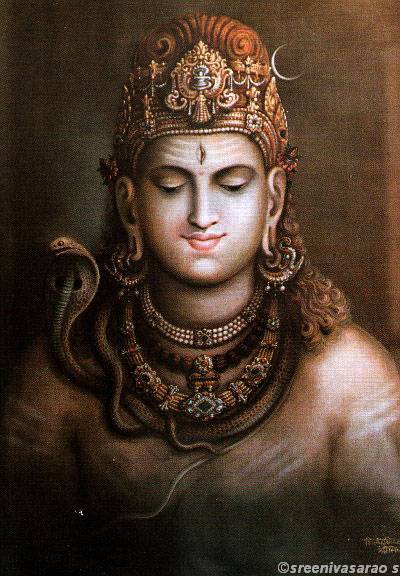
Great Mahbharath is not FICTION- READ PROOFS


Mahabharata was not a fictional epic but a reality is also evident from the works of many scholars who have done extensive work in this area, and by getting all the facts together what comes out of the whole is the fact that the near about exact dates of the major happenings in the epic has also been identified. This at least proves that the Vedic civilization is a much older phenomenon than perceived by many westerns scholars till date

There is a striking inscription which has been found in the Jain Temple at Aihole prepared by one Chalky King Pulakeshi. It says, according to scholars, that the temple was constructed in 30+3000+700+5 = 3735 years, after the Bharat War and 50+6+500 = 556 years of Shaka era in Kali era. Today Shaka era is 1910.Hence 1910- 556 = 1354 years ago the temple was constructed. Thus the year of inscribing this note is 634 AD. At this time 3735 years had passed from the Bharat War. So the date of the War comes to 3101 BC. This is also the date of Kali Yuga Commencement. Naturally, it is evident that relying on the beginning of Kaliyuga Era and holding that the War took place just before the commencement of Kaliyuga

The verse inscribed is :
Trinshatsu Trisahasreshu Bhaaratdahavaditaha | Saptabda ShatayukteshuGateshwabdeshu Panchasu | Panchashatasu Kalaukale Shatasu Panchashatsucha | Samatsu Samatitasu Shakaanamapi Bhoobhujaam ||

The verses has been interpreted by considering the clauses of the verse. It says"3030 years from the Bharat War" in the first line, ( Trinshatsu Trisahasreshu Bhaaratdahavaaditaha) where the first clause of the sentence ends. in the secondline, the second clause starts and runs up to the middle of the third linethus ( Saptabda.....Kalaukale) This means 700+5+50 = 755 years passed in the Kali Era. It is clear from the former portion of the verse that 3030 years passed from the Bharat War and 755 years passed from Kali Era. Kali Era started from 3101 BC.755 years have passed so 3101-755 = 2346 BC is the year when 3030 years had passed from the Bharat War. So 2346+3030 = 5376 BC appears to be the date of Bharat War.

The Greek Ambassador Magasthenis has recorded that 138 generations have passed between Krishna and Chandragupta Maurya. Many scholars have taken this evidence, but taking only 20 years per generation they fixed the date of Krishna as2760 years before Chandragupta. But this is wrong because the record is not of ordinary people to take 20 years per generation. In the matter of general public, one says that when a son is born a new generation starts. But in the case of kings, the name is included in the list of Royal Dynasty only after his coronation to the throne.Hence, one cannot allot 20 years to one king. We have to find out the average per king by calculating on various Indian Dynasties. I have considered 60 kings from various dynasties and calculated the average of each king as 35 years.

Gsv Pics |Gsv Vids | Techno zip| Divine Thought | For The Sake of Us | Gsv Films

September 6, 2012

Sri Krishna- DWARAKA-SECRETS-REVEALED


Lord Sri Krishna chose a remote location, far beyond the reach of Jarasandh. He picked distant Dwarka on the western coast of India near Gujarath, far from Mathura, and spent a year putting hisplans into action. He built on the sunken remains of a previous kingdom, Kushasthali,which itself was built on older ruins, all underwater. Krishna reclaimed a hundredmiles of land from the sea and called in Vishwakarman, the architect of the gods to give him a city that was the envy of the world.

DWARAKA- CITY DESCRIPTION


 Dwarka (LORD SRI KRISHNAS PLACE) was a city of rose and gold. The palaces and many of the mansions were built of gold, over which pink lotus domes towered, topped by soaring golden spires. The floors were made of emeralds. Precious stones studded the walls and crystal arches curved overhead, inlaid with gold. The houses were beautifully decorated and sculptures adorned the walls. Even the cowsheds were made of silver, brass and iron.Seen in this beautiful picture is lord Krishna coming to the island city of dwarka. Dwarka was a very well planned city, following the highly developed science of town planning.


The architect, Vishwakarman, first mapping out the highways, lanes, gates and parks. He sectioned off plots and divided the city into six zones, residential and commercial. He planned out the port and created the bridges and gateways and the fortifications. Everything was laid out in detail before the construction began.Like many kingdoms of the time Dwarka had a passport system. Its citizens were issued with a clay seal which had to be presented when they entered or left the massive gates. The seal of Dwarka was a mythical three headed dog and seals matching the description have been found in the undersea ruins today.

In the Newspaper The Hindu dated 23 Feb 2007 an article was published which I reproduce here vervatim.” CHENNAI: Ancient structural remains of some significance have been discovered at Dwaraka, under water and on land, by the Underwater Archaeology Wing (UAW) of the Archaeological Survey of India (ASI). Alok Tripathi,Superintending Archaeologist, UAW, said the ancient underwater structures found in the Arabian Sea were yet to be identified. "We have to find out what they are. They are fragments. I would not like to call them a wall or a temple. They are part of some structure," said Dr. Tripathi, himself a trained diver.


FOUND VALUABLES AFTER EXCAVATION UNDER THE SEA - DWARAKA 


The first archaeological excavations at Dwaraka were done by the Deccan College,Pune and the Department of Archaeology, Government of Gujarat, in 1963 under the direction of H.D. Sankalia. It revealed artifacts many centuries old.

Thirty copper coins were also found in the excavation area. The structures found on land belonged to the medieval period. "We have also found 30 copper coins. We are cleaning them. After we finish cleaning them, we can give their date," he said.Dwaraka is a coastal town in Jamnagar district of Gujarat. Traditionally, modern Dwaraka is identified with Dvaraka or Dvaravati, mentioned in the Mahabharata as Krishna's city.

Dwaraka was a port, and some scholars have identified it with the island of Barka mentioned in the Periplus of Erythrean Sea. Ancient Dwaraka sank in sea and hence is an important archaeological site.” My idea is not to go in the discussion of how the city went under the sea but the fact is that this city is now approximately under water of the Arabian sea some 135 feet below water. This city has been mentioned in the Mahabharata and that this city has been found, dated,and mapped. The probable date of this city is between 9500 to 7500 years before present which will put it as 7500 to 5500 years BC.

More information will be soon posted.. bookmark and share..

Gsv Pics |Gsv Vids | Techno zip| Divine Thought | For The Sake of Us | Gsv Films

September 3, 2012

Important 18 Chapters of Bhagavad Gita -Krishna -Meaning

The Bhagavad-Gita consists of 18 chapters. Each chapter is called a yoga. Yoga is the science of the individual consciousness attaining communion with the Ultimate Consciousness. So each chapter is a highly specialized yoga revealing the path of attaining realization of the Ultimate Truth. The first six chapters have been classified as the Karma Yoga section as they mainly deal with the science of the individual consciousness attaining communion with the Ultimate Consciousness through actions. These chapters are:


Chapter 1 : Vishada Yoga (Arjuna's State of Instability to go for a war and his feelings )
Chapter 2 : Sankhya Yoga ( Study of  Soul in everybody's body  )
Chapter 3 : Karma Yoga (Study of performing duties and actions to attain GOD )
Chapter 4 : Jnana Yoga ( Study of  knowledge to know about the GOD (Godly Knowledge )
Chapter 5 : Karma Vairagya Yoga ( Leaving all the duties and dedicating to GOD)
Chapter 6 : Abhyasa Yoga ( Study of Souls stability and practice- to acheive Stithapragnatvam   )
The middle six chapters have been designated as the Bhakti Yoga section as they principally are pertaining with the science of the individual consciousness attaning communion with the Ultimate Consciousness by the path of devotion.

Chapter 7 : Paramahamsa Vijnana Yoga ( Knowledge of GODLY powers )
Chapter 8 : Aksara-Parabrahman Yoga ( Study of Birth and Rebirth )
Chapter 9 : Raja-Vidya-Guhya Yoga ( Secrets of Eternal powers to attain Moksha (Raja Yoga   )
Chapter 10 : Vibhuti-Vistara-Yoga ( The Omniscence of God in Universe and the things like by the Lord Krishna )
Chapter 11 : Visvarupa-Darsana Yoga ( All pervading of GOD in the Whole Universe )
Chapter 12 : Bhakti Yoga ( Devotional science to know more about GOD )
The final six chapters are regarded as the Jnana Yoga section as they are primarily concerned with the science of the individual consciousness attaining communion with the Ultimate Consciousness through the intellect.

Chapter 13 : Ksetra-Ksetrajna Vibhaga Yoga ( Study of Gods Soul - Body )
Chapter 14 : Gunatraya-Vibhaga Yoga ( 3 important properties to achieve Godliness)
Chapter 15 : Purusottama Yoga (  Forms of God in the Universe and in the body of man)
Chapter 16 : Daivasura-Sampad-Vibhaga Yoga ( Discussion about Divinity and Cruelty of man)
Chapter 17 : Sraddhatraya-Vibhaga Yoga  ( 3 different forms of Sraddhas (Rajasam, tamasam, Sativikam)
Chapter 18 : Moksha-Opadesa Yoga ( Ultimate reaching of GOD without any rebirth )
 
Lord Krishna spoke the Bhagavad-Gita on the battlefield of Kuruksetra in 3102 B.C.; just prior to the commencement of the Mahabharata war. This date corresponds to 1700 years before Moses, 2500 years before Buddha, 3000 years before Jesus and 3800 years before Mohammed.

So first and foremost it should be clearly understood that the eternal knowledge of the Bhagavad-Gita has not been influenced by Buddhism, Christianity, Hebrewism or Islam; for these religions did not exist at that time and were established milleniums later.Its true and proved by Scientists.

Gsv Pics |Gsv Vids | Techno zip| Divine Thought | For The Sake of Us | Gsv Films

Importance of Bhagavad Gita -Lord Krishna

Bhagavad-Gita Trust is freely offering this presentation of Srimad Bhagavad-Gita to the Earth as a gift to humanity. 

It is our humble but earnest request that this information be made easily available to every culture in this world. The knowledge found within the Bhagavad-Gita is incomparable as it gives specific information regarding the purpose of human existence, the immortality of the soul and our eternal relationship with God. 

This information applies to each and every one of us without exception. Without realization of our divine relationship with the God it is impossible to establish our eternal relationship with Him. This divine relationship is our natural constitutional position and every human beings birthright. 

There are three paths which lead directly to establishing a relationship with God. According to the authority of Bhagavad-Gita these paths have been designated as the yoga of perfect actions, the yoga of perfect devotion and the yoga of perfect knowledge. 

These three paths with great care and attention have been fully explained in the Bhagavad-Gita which comprises chapters 23 through 40 in the Bhishma-Parva section of Mahabharata. 

The Bhagavad-Gita consists of 18 chapters. Each chapter is called a yoga. Yoga is the science of the individual consciousness attaining communion with the Ultimate Consciousness. So each chapter is a highly specialized yoga revealing the path of attaining realization of the Ultimate Truth. 
 
Lord Krishna spoke the Bhagavad-Gita on the battlefield of Kuruksetra in 3102 B.C.; just prior to the commencement of the Mahabharata war. This date corresponds to 1700 years before Moses, 2500 years before Buddha, 3000 years before Jesus and 3800 years before Mohammed. So first and foremost it should be clearly understood that the eternal knowledge of the Bhagavad-Gita has not been influenced by Buddhism, Christianity, Hebrewism or Islam; for these religions did not exist at that time and were established milleniums later.

That proof of the date 3102 B.C. can be verified by any knowledgeable indologist in India based on the fact that this was the year when the Pandava King Yudhisthira ascended the throne and was coronated as emperor of the Earth. Also according to the Aihole inscription of Pulakesin II, the Battle of Kuruksetra took place in 3102 B.C. with Lord Krishna reciting the Bhagavad-Gita before its commencement.

As well precise information of the positions of the constellation at the commencement of the Battle of Kuruksetra have been given in the great historical epic Mahabharata itself, which is based on the 26,920 year astronomical cycle known as the precession of the equinoxes which is the time it takes our solar system to revolve around the central sun.

But who exactly is Lord Krishna? Is He Narayana? Is He Vishnu? Is He Vasudeva as referred to in the Taittirya Aranyaka 10.1. 6 ? In the Bhagavad-Gita the Supreme Lord Krishna is addressed by Arjuna with 41 different names. Some of these names are Acyuta, Bhagavan, Govinda, Hari, Isvara, Janardana, Kesava, Madhava, Purusottama and Yogesvara as well as Vasudeva and Vishnu. Although Lord Krishna possesses unlimited names due to His unlimited attributes and potencies it should be clearly understood that the Krishna who is so wonderfully presented in the Puranas is one and the same Krishna who spoke the Bhagavad-Gita and is so marvelously glorified in the Mahabharata.

It should be understood that the Bhagavad-Gita is the very essence of Mahabharata. The Bhagavad-Gita literally translates as the Song of God! It was originally revealed in the classical language of Sanskrit spoken on the Indian sub-continent. It was first translated into English in 1785 by Charles Wilkins. It was translated into Latin in 1823 by Schlegel, into German in 1826 by Von Humbolt, into French in 1846 by Lassens and into Greek in 1848 by Galanos. By now it has been translated into all the major languages of the world such as Russian, Chinese, Japanese, Spanish, Italian, Dutch, Hebrew, Portugese, Arabic, Telugu,Tamil, Hindi,  and Bengali.
Gsv Pics |Gsv Vids | Techno zip| Divine Thought | For The Sake of Us | Gsv Films

July 4, 2012

Importance GURU PURNIMA MEANING Celebration


Hindus will give paramount importance to spiritual Gurus and Preachers. Gurus are often equated with God and always regarded as a link between the individual and the Immortal. Just as the moon shines by reflecting the light of the sun, and glorifies it, all disciples can dazzle like the moon by gaining from their Gurus.
For me Guru is a Mediator in between GOD and Disciple.

(At the end of this article you can download 91 Gurus photo documented as  PDF YOU CAN SHARE IT TO YOUR FRIENDS)

What is Guru Purnima?

The full moon day in the Hindu month of Ashad (July-August) is observed as the auspicious day of Guru Purnima, a day sacred to the memory of the great sage Vyasa. All Hindus are indebted to this ancient saint who edited the four Vedas, wrote the 18 Puranas, the Mahabharata and the Srimad Bhagavata. Vyasa even taught Dattatreya, who is regarded as the Guru of Gurus. Shiridi Saibaba shown so many miracles and wonders to the devotees who looked at him and who admired him as a GREAT GURU (GURU MAHARAJ). Guru is not restricted to one person.  It is a status given by the GOD to Preach something Good to Society. 

Lord Hanuman is also a Great Guru, Lord Preached us 
  • How to pray God ?
  • How to be Loyal to God?

Significance of Guru Purnima

On this day, all spiritual aspirants and devotees worship Vyasa in honor of his divine personage and all disciples perform a 'puja' of their respective spiritual preceptor or 'Gurudevs'.

This day is of deep significance to the farmers, for it heralds the setting in of the much-needed rains, as the advent of cool showers usher in fresh life in the fields. It is a good time to begin your spiritual lessons. Traditionally, spiritual seekers commence to intensify their spiritual 'sadhana' from this day.

The period 'Chaturmas' ("four months") begins from this day. In the past, wandering spiritual masters and their disciples used to settle down at a place to study and discourse on the Brahma Sutras composed by Vyasa, and engage themselves in Vedantic discussions.

Guru Purnima Moola Mantra which should be daily recited.


Gururbrahmaa gururvishnuh gururdevo Maheswarah |
Guruh-saakshaat parambrahma tasmai shrigurave namah ||


“Guru is creator Brahma; Guru is preserver Vishnu; Guru is also the destroyer Siva and he is the source of the Absolute. I offer all my salutations to the Guru”.

The Role of the Guru

At the Spiritual Guru Sivananda Ashram, Rishikesh, the Guru Purnima is celebrated every year on a grand scale.
1. All aspirants awake at Brahmamuhurta, at 4 o'clock. They meditate on the Guru and chant his prayers.
2. Later in the day, the sacred worship of the Guru's Feet is performed. Of this worship it is said in the Guru Gita:

Dhyaana moolam guror murtih;
Pooja moolam guror padam;
Mantra moolam guror vakyam;
Moksha moolam guror kripa


"The Guru's form should be meditated upon; the feet of the Guru should be worshipped; his words are to be treated as a sacred Mantra; his Grace ensures final liberation".
3. Sadhus and Sannyasins are then worshipped and fed at noon.
4. There is continuous Satsang during which discourses are held on the glory of devotion to the Guru in particular, and on spiritual topics in general.
5. Deserving aspirants are initiated into the Holy Order of Sannyas, as this is a highly auspicious occasion.
6. Devout disciples fast and spend the whole day in prayer. They also take fresh resolves for spiritual progress.

The Guru's Advice towards praying of GOD.

Swami Sivananda recommends: "Wake up at Brahmamuhurta (at 4 a.m.) on this most holy day. Meditate on the lotus feet of your Guru. Mentally pray to him for his Grace, through which alone you can attain Self-realisation. Do vigorous Japa and meditate in the early morning hours.

"After bath, worship the lotus feet of your Guru, or his image or picture with flowers, fruits, incense and camphor. Fast or take only milk and fruits the whole day.
In the afternoon, sit with other devotees of your Guru and discuss with them the glories and teachings of your Guru.

"Alternatively, you may observe the vow of silence and study the books or writings of your Guru, or mentally reflect upon his teachings. Take fresh resolves on this holy day, to tread the spiritual path in accordance with the precepts of your Guru.

"At night, assemble again with other devotees, and sing the Names of the Lord and the glories of your Guru. The best form of worship of the Guru is to follow his teachings, to shine as the very embodiment of his teachings, and to propagate his glory and his message."

September 16, 2011

Jaya Janardhana Krishna Radhika Pathe - Lryrics -Listen

Jaya Janardhana Krishna Radhika Pathe  Fantastic Bhajan sung by a 3yr old girl with awesome lyrics


Jaya Janardhana Krishna Radhika Pathe........Listen and read lyrics.
Brahmanda Guruji Shri Narendra Babu Sharmaji played this song in his Bruhat Brahmanda Programme on occasion of Krishna Janmashtami.

Listen to this song by clicking play button and read the lyrics as follows...


To Listen Jaya Janardhana Krishna Radhika Pathe


Click Play


Jaya Janardhana Krishna Radhika Pathe Lyrics in Telugu script:


Jaya Janardhana Krishna Radhika Pathe Lyrics in English script:

Jaya Janardhana Krishna Radhika Pathe
Jana vimochana Krishna Janma Mochana
Garuda Vahana Krishna Gopika Pathe
Nayana mohana Krishna Neeajekshana

Sujana Bandhava Krishna Sundarakruthe
Madana Komala Krishna Madhava Hare
Vasumati Pathe Krishna Vasavanuja
VaraguNakara Krishna Vaishnavakruthe
Suruchiranana Krishna Shouryavaridhe
Murahara Vibho Krishna mukthidayaka
Vimalapalaka Krishna Vallabhipathe
Kamalalochana Krishna kamyadayaka

Vimalagatrane Krishna Bhaktavatsala?
Charana pallavam Krishna Karuna Komalam
KuvalaikshaNa Krishna komalaakruthe
tava padambujam Krishna sharanamashraye
Bhuvana nayaka Krishna pavanakruthe
GuNagaNojwala Krishna Nalinalochana
Pranayavaridhe Krishna guNagaNakara
damasodara Krishna deena vatsala

Kamasundara Krishna pahi sarvada
Narakanashana Krishna? Narasahayaka
Devaki sutha Krishna KaruNyambhude
Kamsanashana Krishna Dwaraksthitha
Pavanatmaka Krishna dehi mangaLam
Tvatpadambujam Krishna Shyama komalam
Bhaktavatsala Krishna Kamyadayaka
Palisennanu Krishna Srihari namo

Bhaktadasa naa Krishna Harasu Nee sada
Kadu ninthena Krishna Salaheya Vibho
Garuda vahan Krishna Gopika Pathe
Nayana mohana Krishna Neerajekshana

Jaya Janardhana Krishna Radhika Pathey as Ringtone

JAYA JANARDHANA KRISHNA RADHIKA PATHEY - VIDEO SONG WATCH HERE...

August 13, 2011

SiteMap - Divine Thought - All about Temples

This page is dedicated to SITEMAP-
 where you can find all the links of this particular blog ordered by Lables.

Temples Facts, festival importance, stotras, prayers, devotional songs
Keep track all links and sections.
Go Beyond ...
Send this to your near and dear..


December 16, 2010

Importance and meaning of Vaikunta Ekadasi

Significance of Vaikunta Ekadasi or Mukkoti Ekadasi.

Vaikunta

Vaikunta is the name of Lord SriManNarayana. It is the place where Lord Sri Maha Vishnu resides along with his Consort Goddess Sri Maha Lakshmi resting on Aadisesha. It is known as Parama Padam, the supreme abode and the most coveted place. It is the sacred abode where every soul would be longing to go and stay eternally. The nearest reference to Vaikunta, we find in Vishnu Sahasranama sloka # 44 which reads as follows.

! Vaikuntah Purushah Praanah Praanadah Pranavah Prithuh
Hiranyagarbhah Shatrughno Vyaapto VaayurAdhokshajah!!

Meaning

Lord Maha Vishnu also known as Vaikunta is the remover of obstacles and sins and Vaikunta is the place which removes obstacles. He is the one who has united all the Pancha Bhoothas and made them to co-exist with each other. He is the Purifier and the one who gives in plenty. He is the primordial person who existed before anything else, and the one who is the cause of the origin and end of the world! He is one who outshines everyone. He burns away all the sins of his devotees.

He is life giver and is the vital air that gives or sustains life. He is the prana (life) to every one including Devathas. He is the one who makes others bow before Him and the one who deserves to be adored. He is the one who expands himself as Cosmos. He is as pure as Gold. He is the one who delights every one’s heart.

He is the slayer of enemies (Arishadvargas) of people and also destroyer of enemies of Gods. He is the one who is full of benevolence, love and affection without any discrimination. He is the one who is omnipresent and there is no single place where he does not exist. He is the one who manifests himself, never gets diminished and is the all pervasive Supreme God.

Ekadasi

As per Padma Purana, Ekadasi is depicted as the female energy of Maha Vishnu who in the form of a damsel kills the demon Mura and protects the Indradi Devathas on this day. Pleased by the act of his Female energy He names her as Ekadasi. Thus, Ekadasi thithi became the dearest to Lord Sri Maha Vishnu. He also gave her a boon that, whoever worships Ekadasi and observes fasting on this day would reach Vaikunta (His abode) and his doors will be open for such people. From time immemorial, it is the Northern Gate known as Paramapada or Vaikunta Dwara that is kept open for a single day and that day is known as Vaikunta Ekadasi Day. It is also called as Mukkoti Ekadasi.

The combination of Uttara Dwara darshanam of Lord Vaikunta plus Ekadasi thithi has attained significance as Vaikunta Ekadasi. It is said that on this day all the Brahmaadi Devathas ( 3 crore Gods and Godesses) visit Sri Vaikuntam to have Uttara Dwara darshanam of Lord SriManNarayana. It is befitting and considered to be the most auspicious day to worship Lord Sri ManNarayana along with Goddess Sri Maha Lakshmi and also to have Uttara Dwara darshana of the Lord on this day. Special celebrations are held at Tirumala, Sri Rangam, Bhadrachalam etc… where thousands of devotees visit these temples to have the Uttara Dwara darshanam of the Lord.

 Vaikunta Ekadasi Importance and meaning - in Detail ---

Ekadashi, the 11th day of the waxing or waning moon is considered as one of the important days by all devotees of Krishna. Lord Krishna is very pleased with one who fasts on this day. In general, the devotees fast completely on this day and many do not drink even a drop of water. This austerity is taken up by devotees of the Lord to please Him. Acharyas - great spiritual teachers have recommended that if one is unable observe a complete fast he should at least fast from grains and partake only fruits, milk and root preparations on every Ekadashi. It is said that by fasting on this day and remembering the pastimes of Lord Krishna, all of one’s sins are eradicated and one is purified.

The month of Margasirsha (Dec-Jan) also known as Dhanur Masa is of great importance to the devotees of Lord Krishna. Lord Krishna says in the Bhagavad-gita – ‘masanam margasirso ham’ - of the months, I am Margasirsa. The Ekadashi, 11th day of the waxing moon of Maragasirsa masa is popularly known as Vaikuntha Ekadashi. This Ekadashi acquires significance because the great devotee Nammalwar, who come in the disciplic succession of Sri Ramanuja, went back to home, back to Godhead on this day. 

Lord Vishnu, the Lord of Vaikuntha was at the door of Vaikuntha to receive His unalloyed devotee. To commemorate this great event, generally all Vishnu temples create a Vaikuntha Dwara - a special entrance - in the temple and the utsava deities of the temple are installed near the dwara. It is said that anyone who passes through the Vaikuntha dwara is guaranteed to go back to home, back to Godhead.

Apart from this, Vaikuntha Ekadashi is the day on which the epic churning of the ocean of milk was completed by the demons and demigods and the proverbial nectar obtained. It was also on this day that Lord Krishna spoke the Bhagavad-gita to Arjuna on the battlefield of Kurukshetra.

October 16, 2010

How to Understand Bhaghawad Geetha - Lord Krishna


To understand the meaning of the Geetha, the reverential approach is necessary. You must take up its study in an attitude of submission and expectancy. For the Geetha is the “milk” of the Upanishads, “drawn” by the Cowherd Krishna with the help of Arjuna, “the calf,” for all the “dull-witted” to drink and draw sustenance from. 

There are some who argue that the Geetha as a sacred poem was a creation later than the Mahabharatha, of which it is a part; but whatever may be said of the composition of the Geetha, there is no doubt that the principles and teachings of the Geetha are ancient, nay, dateless. In the first three slokas of the fourth chapter, reference is made to the Lord instructing the Geetha to Surya (Sun) first and later to Manu; and to the fact that from Manu it reached Ikshvaku and thence to others in succession! So the Geetha is beyond the category of time and it cannot be assigned to a particular point of time, past or present. 

 The Geetha is a text for spiritual practitioners, for it emphasises sadhana (spiritual discipline), and spiritual attitudes, more than anything else. Every chapter lays down means and methods of reaching the goal of peace and harmony. Now sadhana is the product of keen and steady yearning for progress. The aspirant must aspire, not despair. He must persevere, not clamour for quick success. 

The Geetha is as a boat, which takes man across from the selfimposed state of bondage to the freedom which is his nature. He is taken from darkness to Light, from lustrelessness to Splendour. The Geetha ordains for man disciplines and duties which are free from the taints of Vasanas (tendencies and impulses) that tie him to the relentless wheel of birth and death. 

Really speaking, man has come into this Karmakshetra (Field of Activity) only to engage himself in activity, not in order to earn the fruit of such activity. That is the teaching of the Geetha, its fundamental lesson. The Geetha is the quintessence of the meaning of all the Vedas, Yajnas and Yagas (offerings for the glory of God). 

The outward-directed activities are mentioned in the preliminary portions of the Vedas. Activities of the mind, like the Upasanas, which are directed inward are mentioned later. Jnana Yoga too is expounded to minds thus clarified and purified.


Read Bhaghavad Geetha - 1 SLOKA - A DAY Understand - Read - Explain to your friends and dear ones 

Recent Posts

Admins Youtube -Devotional Videos

Thanks and Vist us Again

Gsv Pics |Gsv Vids | Techno zip| Divine Thought | For The Sake of Us | Gsv Films | DMCA POLICY | Privacy Policy
Note: ALL THE PHOTOS,STILLS AND PICTURES FOUND IN THIS BLOG ARE FROM VARIOUS INTERNET SOURCES AND SOME ARE FROM THE PROPER RIGHT FROM THE WEBSITE OWNERS IF YOU FIND ANYTHING ILLEGAL AND YOU WANT US TO REMOVE IT FROM THIS BLOG EMAIL US TO gsvfilmsblog @ Gmail .com WE WILL REMOVE It IMMEDIATELY.... Contact Us Copyright 2011 A product of GSV Films. Actors Actress Unseen Photos!

Related Posts Plugin for WordPress, Blogger...